
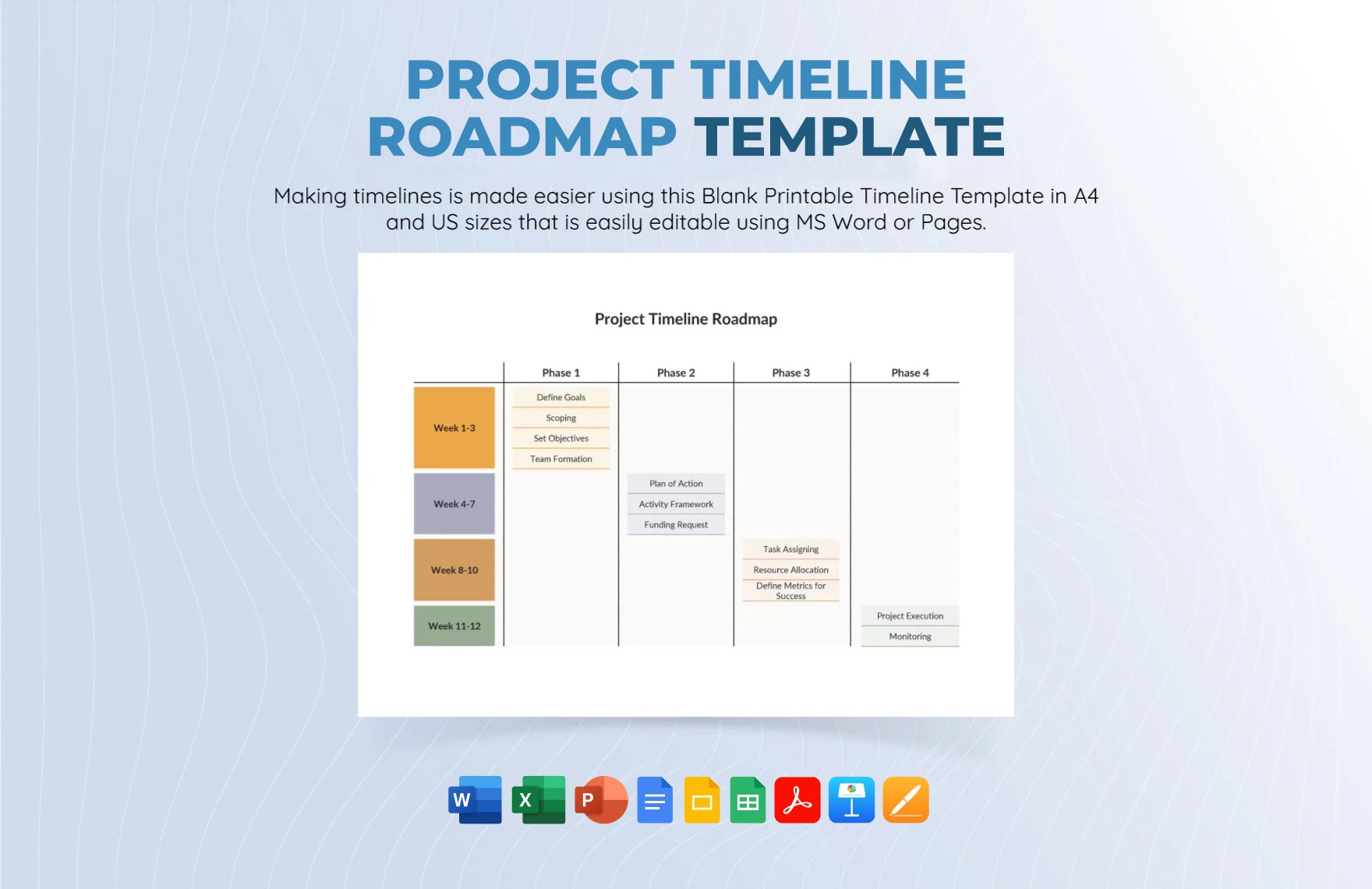
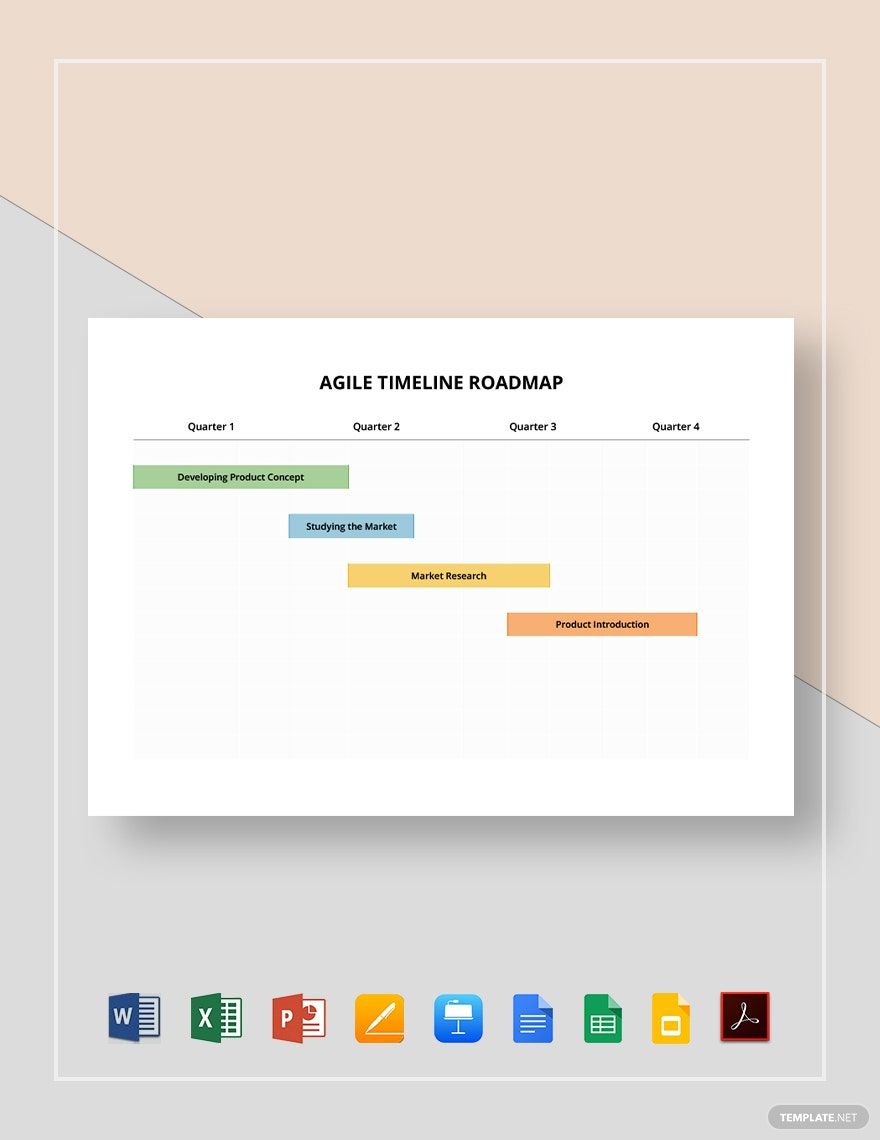
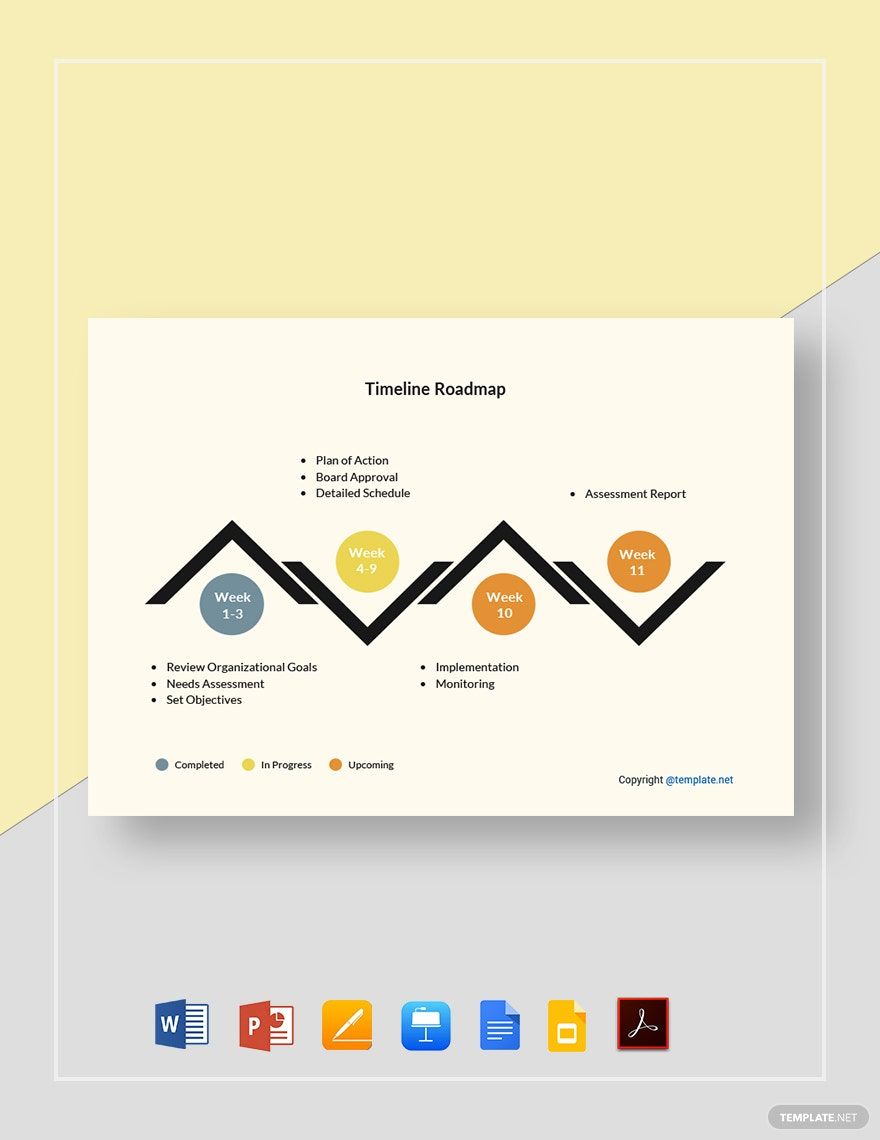
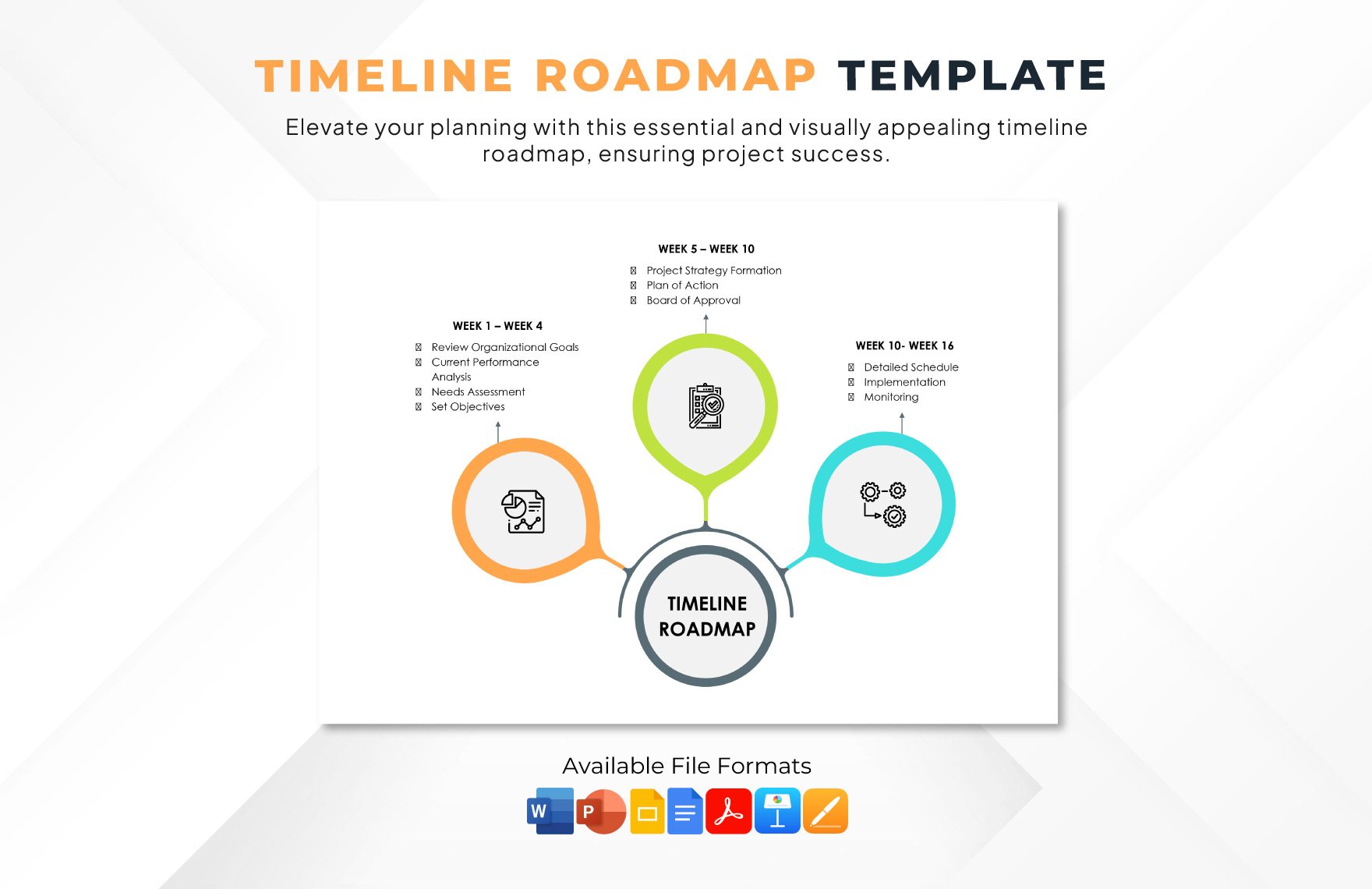
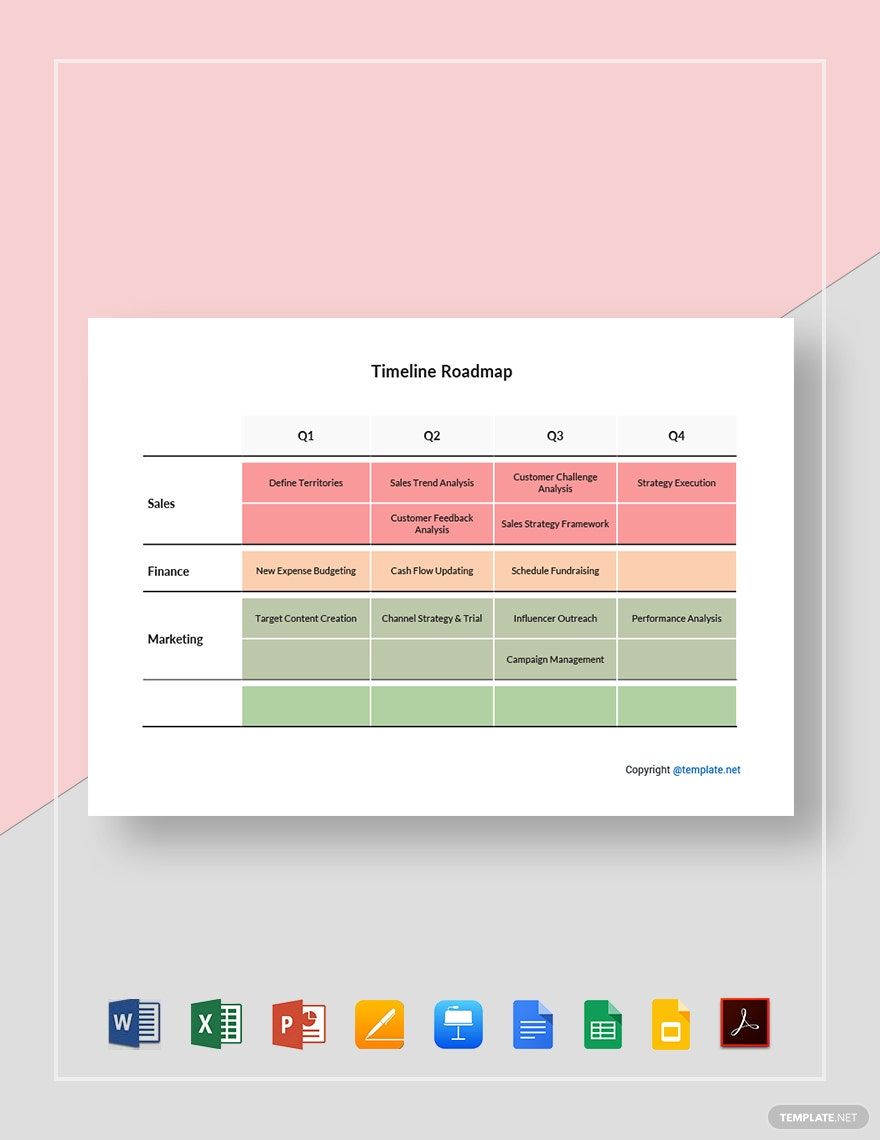
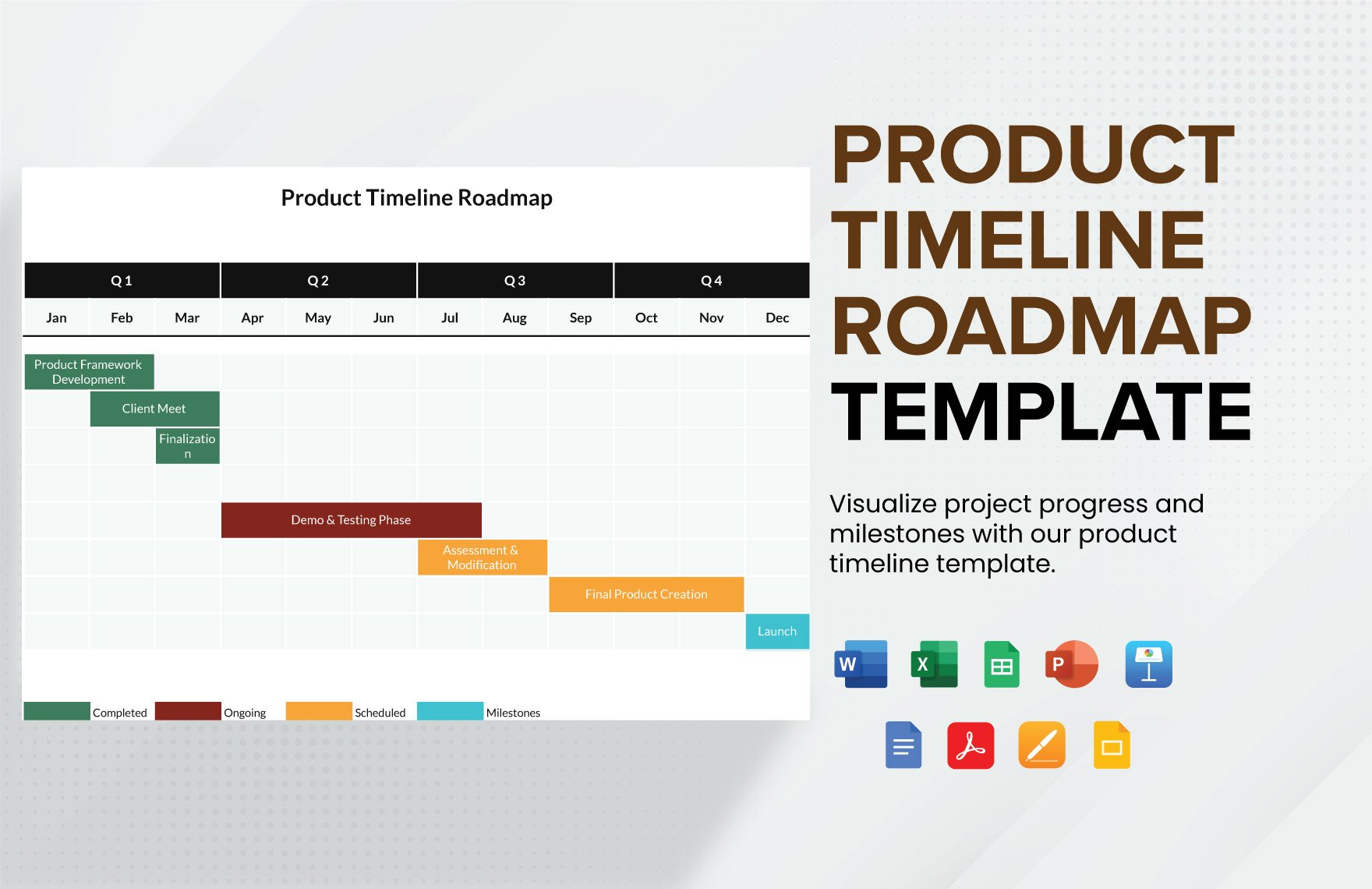
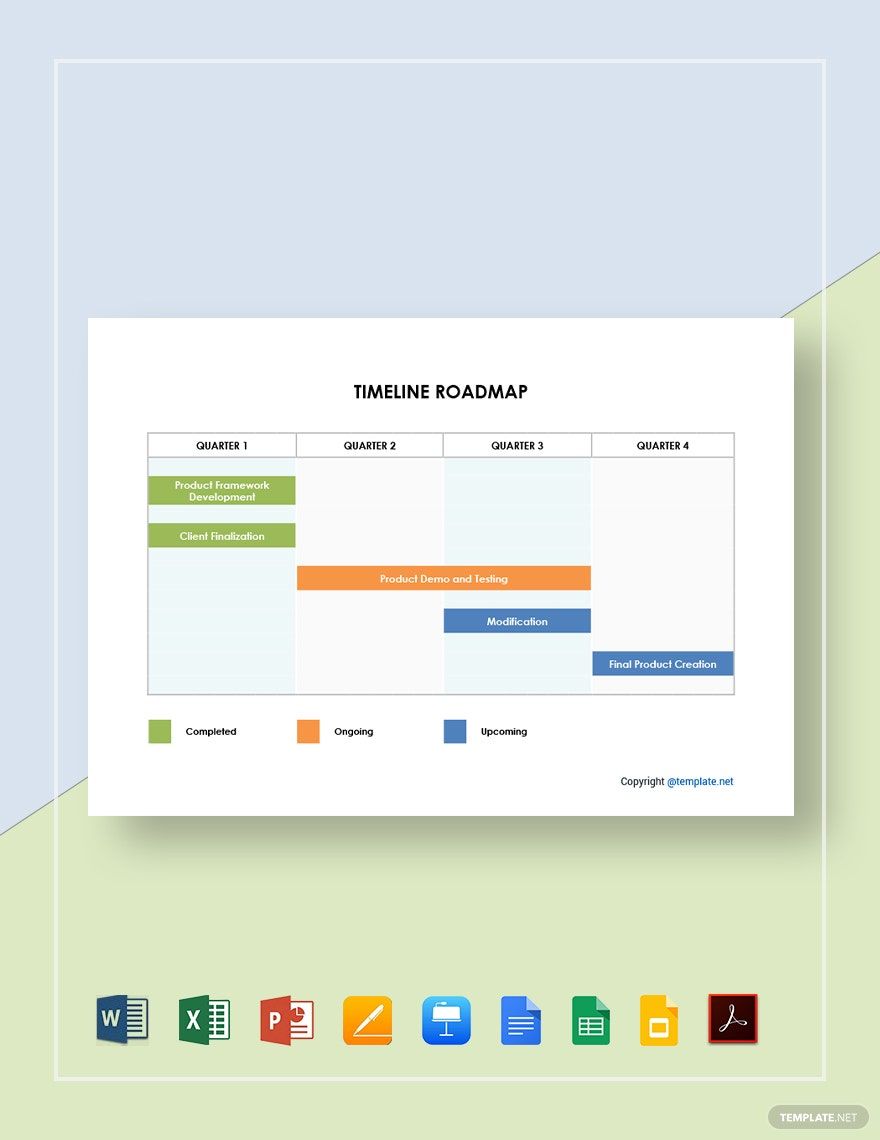
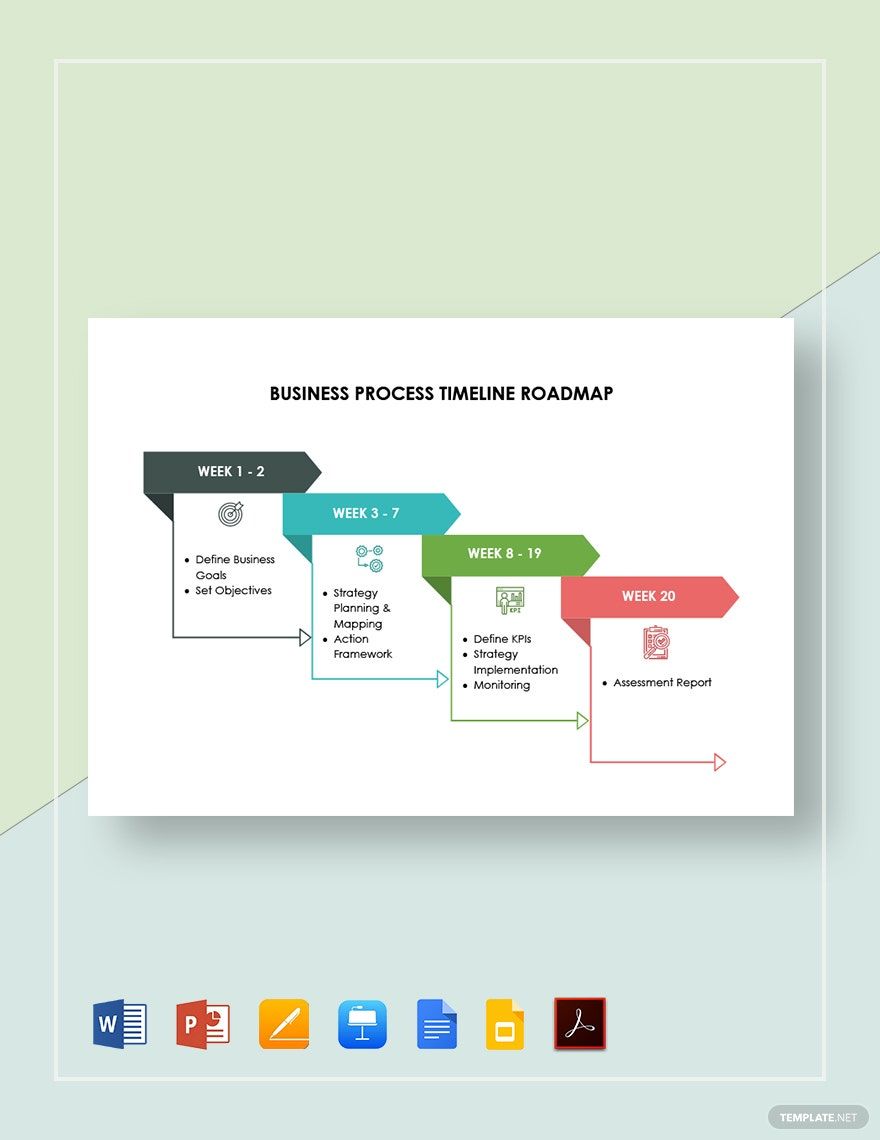
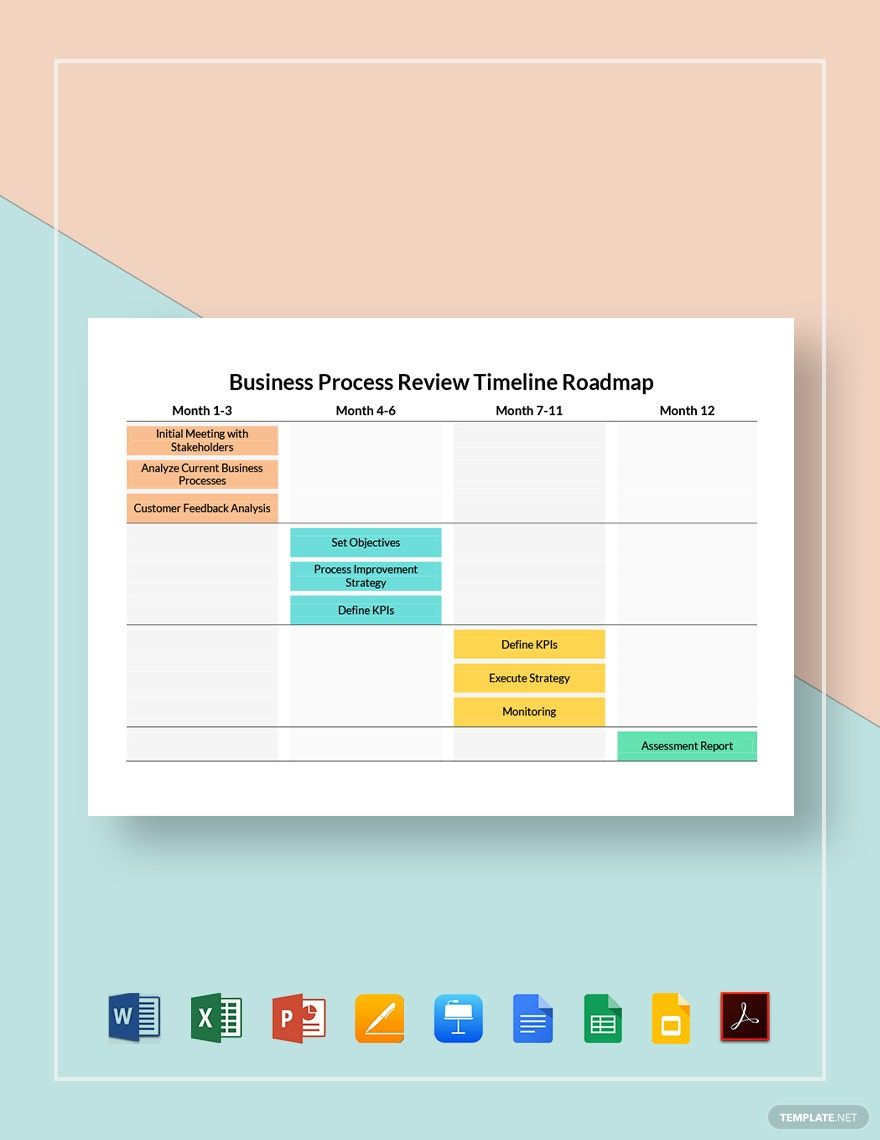
Many businesses fail due to a lack of vision and step-by-step planning on how to reach your goals. What do you want to achieve in the long run? What milestones and projects do you need to complete? More importantly, when do you want your objective to manifest? Our Timeline Roadmap Templates in Google Slides is everything you need so you can step your game up in the corporate world. Plot your detailed schedule of tasks with our 100% customizable high-quality templates that professionals created just for you. Plus, these are all printable in different sizes. Work hard and play harder by downloading our ready-made templates now!
Free Timeline Roadmap Template in Google Slide
Create an Agile Roadmap or Swimlane That’s Beneficial for Your Company to Plan Out a Comprehensive Project Strategy within an Allotted Timeframe. Accomplish That with Template.net’s Full Line of Free Timeline Roadmap Templates You Can Utilize to Guide Team Members’ Tasks. All Our Templates Are Easily Editable in Any File Format and Compatible with Presentation Tools Such as Google Slides.

How to Create a Timeline Roadmap
According to the website, Medium, a roadmap consists of strategic paths, so the team comes up with business goals. A timeline, on the other hand, makes sure that your plans deliver the outcome. It visually displays the tasks, resources, schedules, and milestones of a project. To sum the two up, a timeline roadmap is a visual tool used to review business processes with tasks and landmarks on a timeline to reach business goals.
Since we are in the age of digital technology, a timeline roadmap in Google Slides is convenient when you need to present your strategies and schedule in fulfilling these. However, you need to know the tips on how to create a timeline roadmap effectively by reading below.
1. Create a Scope of Your Project
Without a clear destination, you will surely get lost. What product do you want to achieve at the end of your project? Be precise with what you want to accomplish on your outline. So, ensure that your objective for what you want to achieve is clear for the team.
2. Break Deliverable Into Paths
Since a large project is hard to accomplish in one day, break it down into small deliverables. For example, if you want to build a subdivision, determine how many square meters you will allot for the recreation area, commercial building, and residential units.
3. Formulate Tasks for Each Path
Since you have already determined small deliverables, create tasks you need to complete to accomplish each component of the project.
4. Determine the Prerequisites for Each Task
Some jobs need completion first before you can proceed to the next one. This is also known as dependency. You can’t start digging if you don’t have a shovel. Right? You may also even plan which areas need pre-requisite actions so that you can begin these tasks first.
5. Estimate the Total Time You Need to Complete Task
How long will it take to accomplish each task? You need to know the total time needed for the project as a whole, and the estimated time each task should finish since these are all essential in creating a timeline.
6. Track Progress Through Milestones
Track progress from start to finish through setting milestones. Focus on the target by keeping track of your deadlines for each task.
Frequently Asked Questions
Are the product roadmap and project roadmap the same?
These two differ from each other. While product roadmaps are focused more on the overall outcome of the product or service sold to consumers, project roadmaps give more details and attention to the timeline of the project. Project roadmaps contain goals and objectives, milestones, resources, timeline, and even possible risks.
Is the program roadmap and timeline roadmap the same?
No, they aren’t. A program roadmap has the lifecycle of a program in it such as the phases it will undergo. Functional areas are also highlighted here. Timeline roadmap, on the other hand, has accurate milestones for each phase.
What is a product roadmap?
This type of roadmap is more focused on the steps you need to take in order to finish a product. If you aim to finish writing a book for an instance, you put the book's goals, its unique features, and type of book launch your plan in the product roadmap.
