
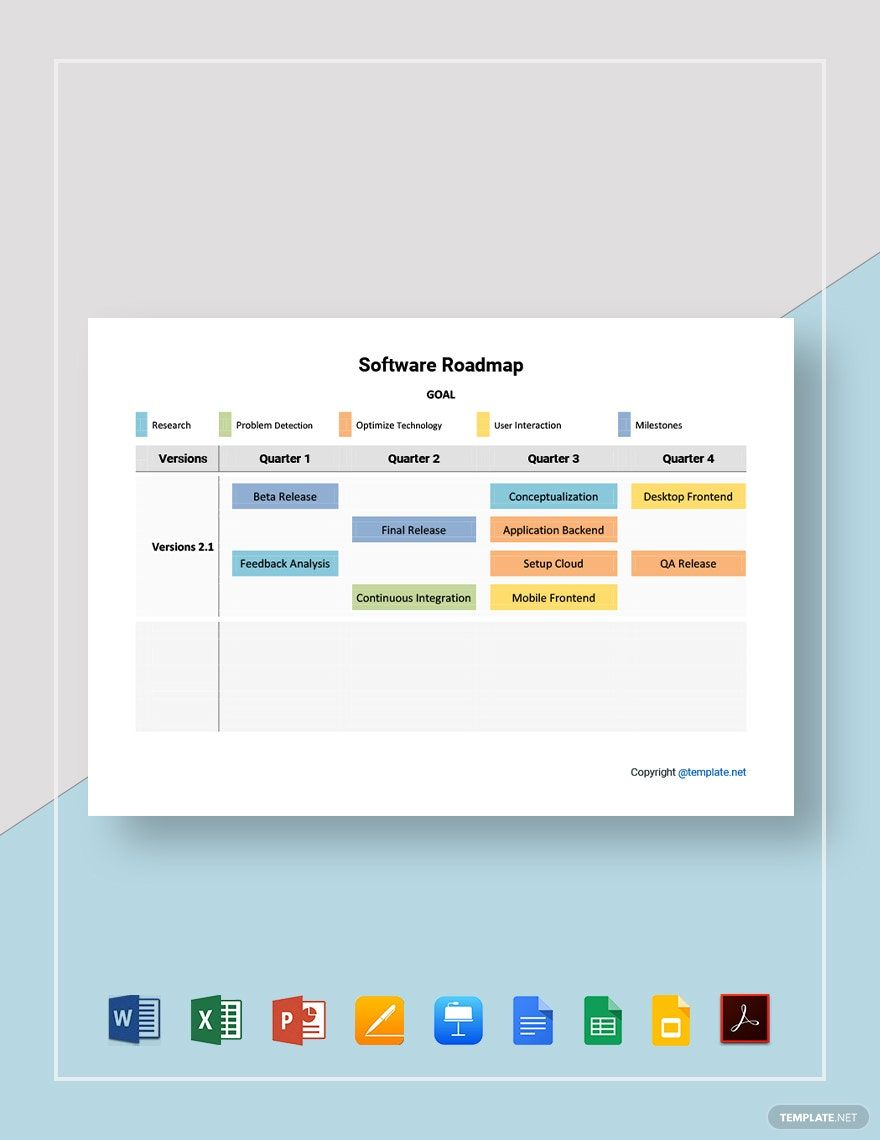
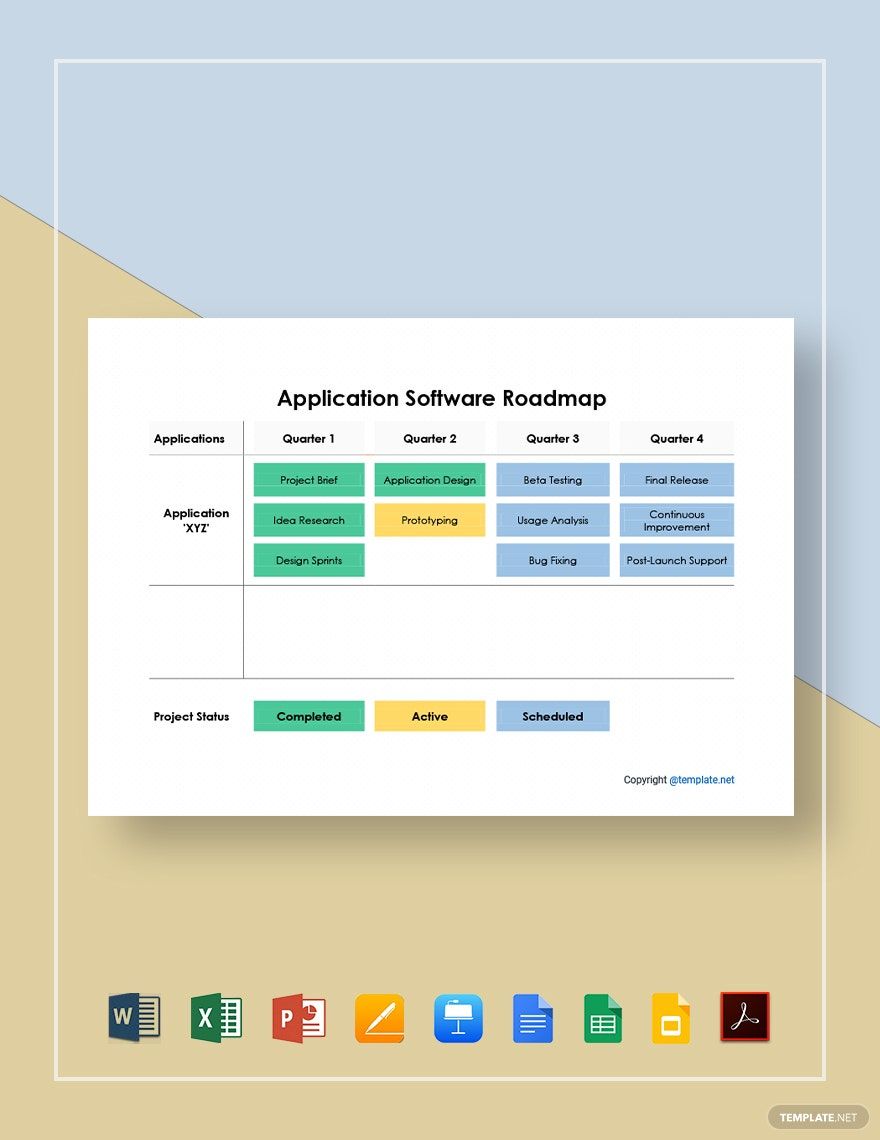
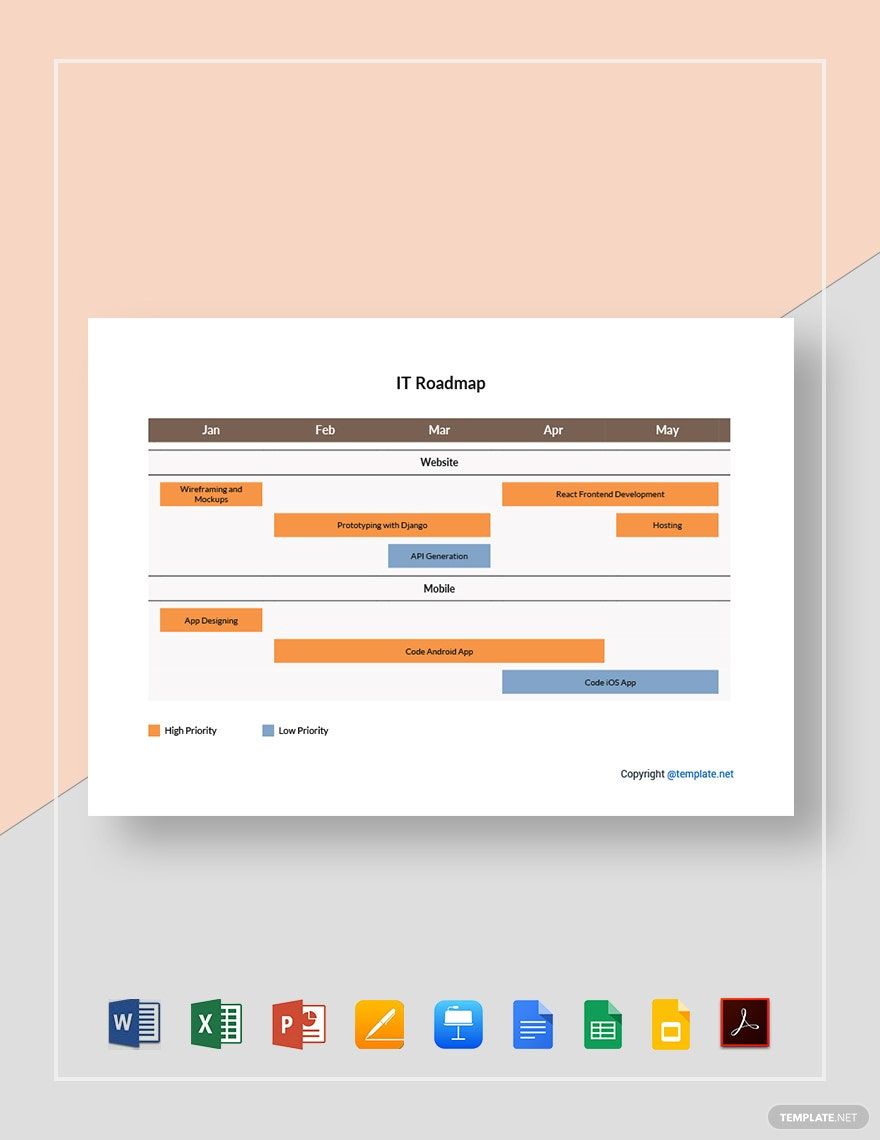
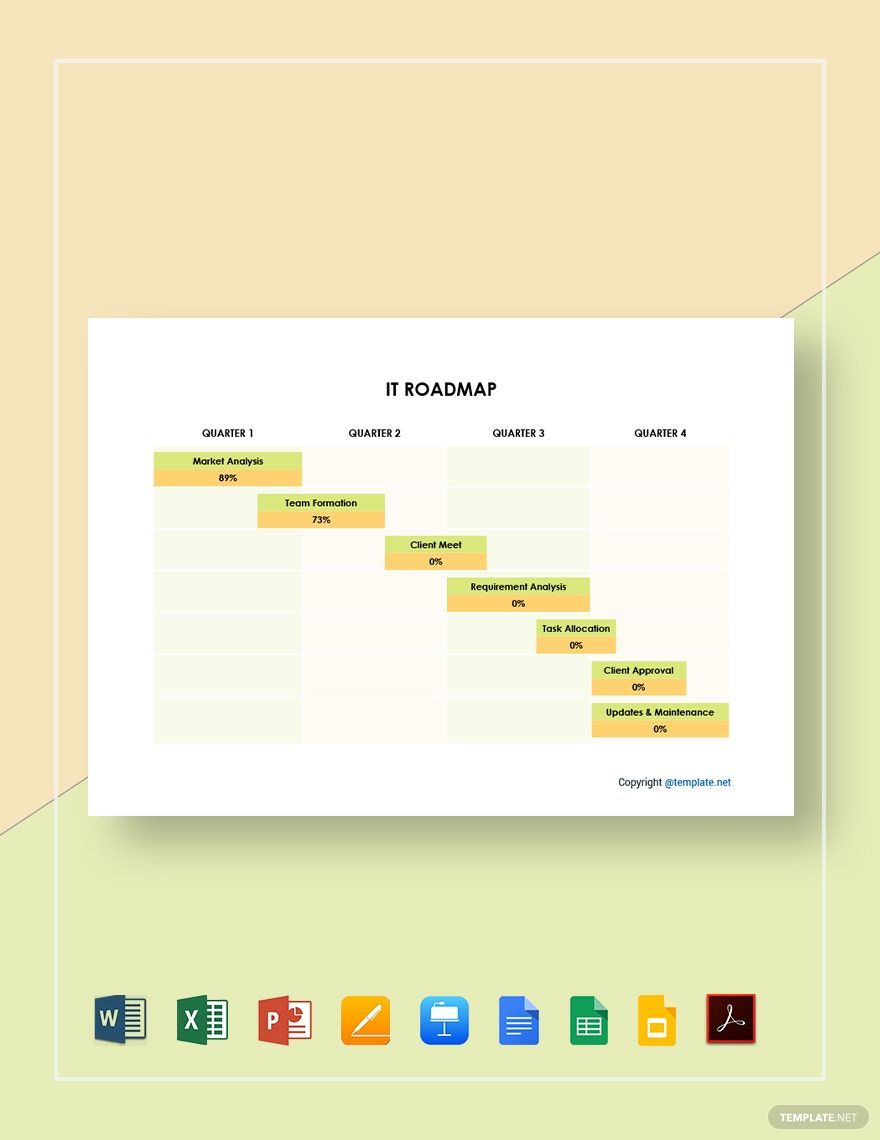
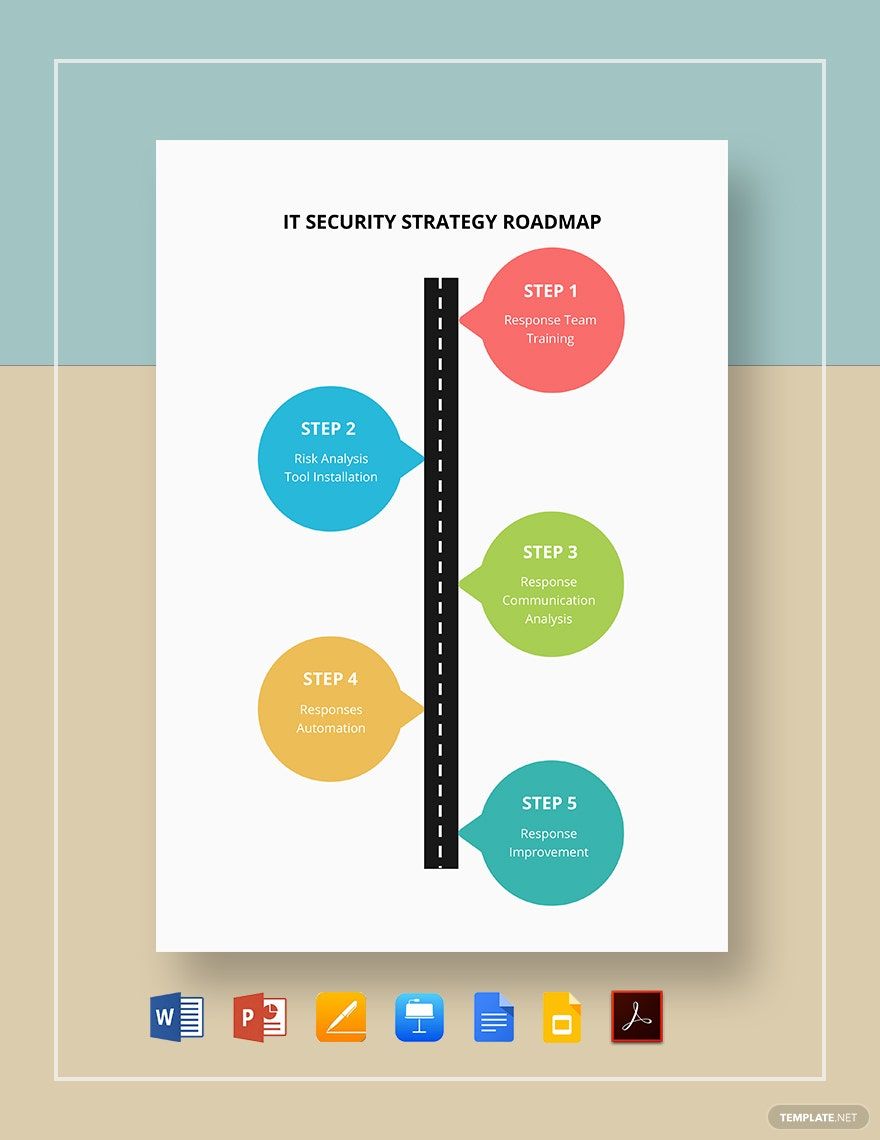
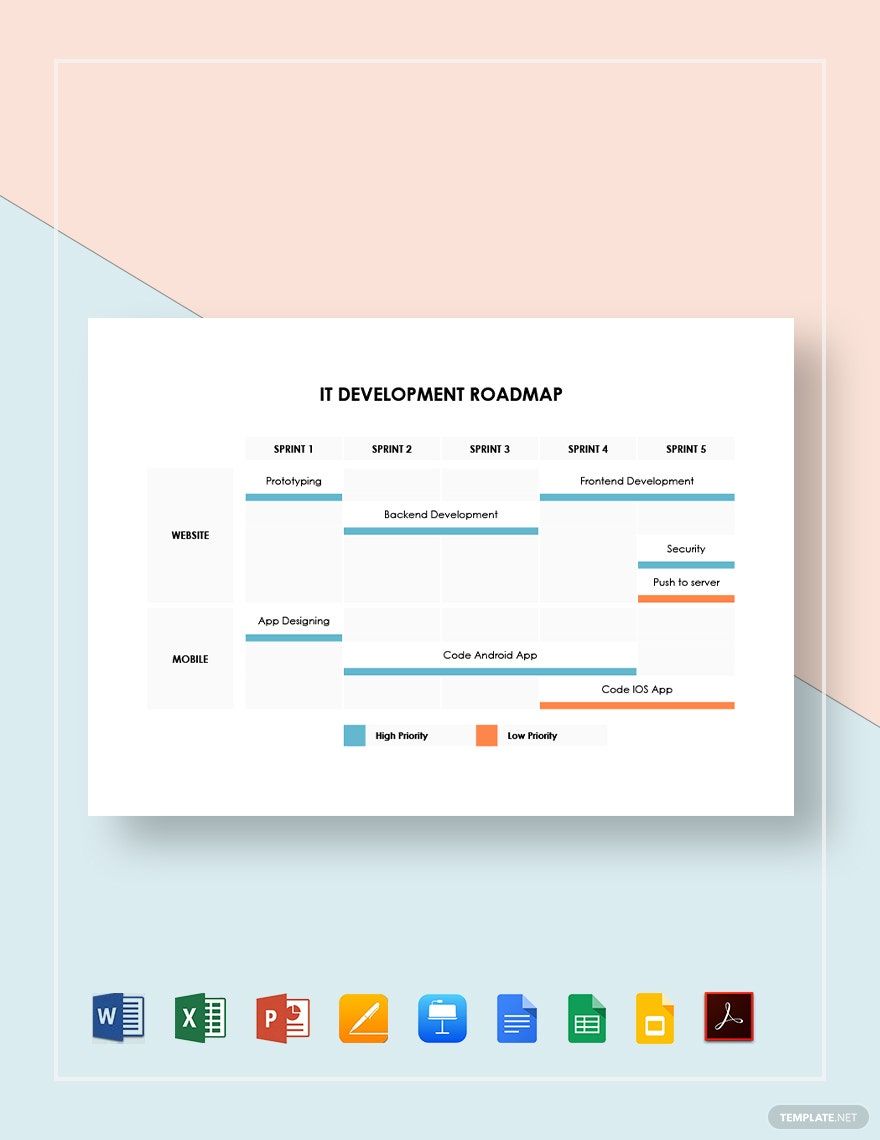
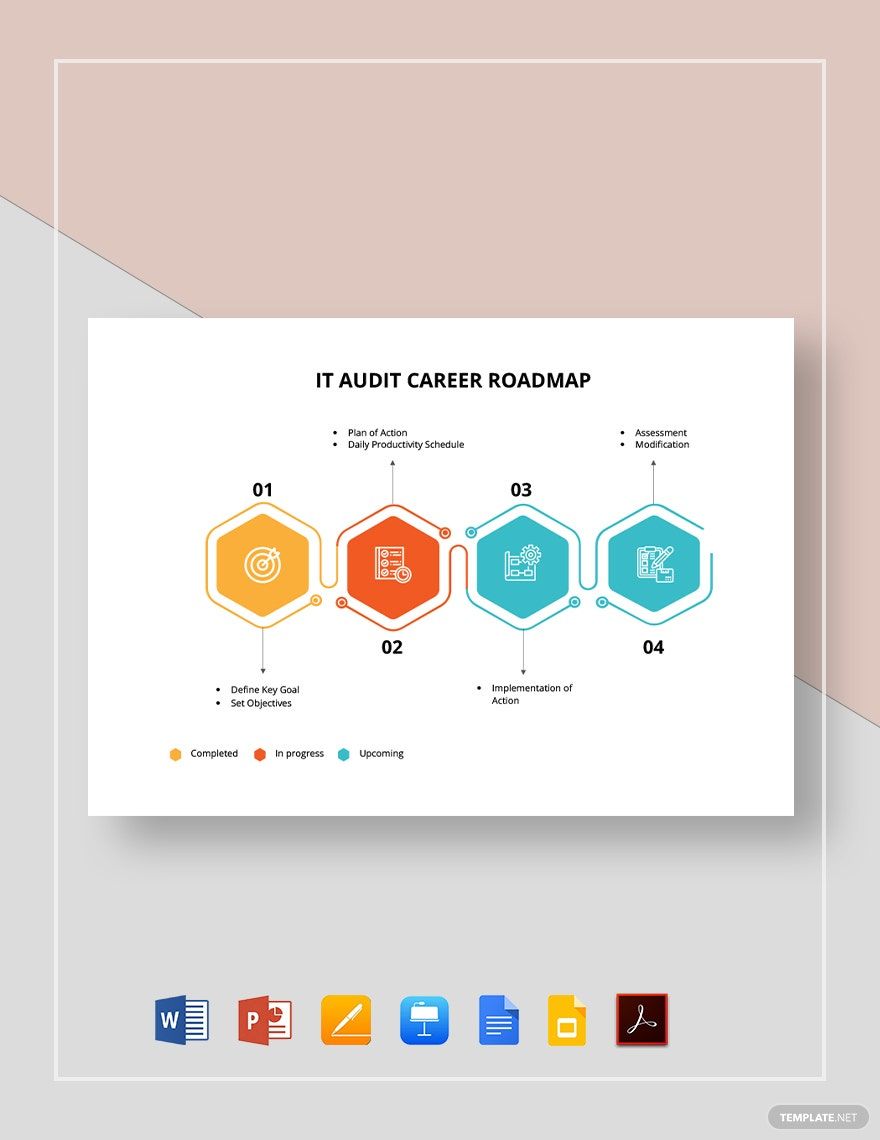
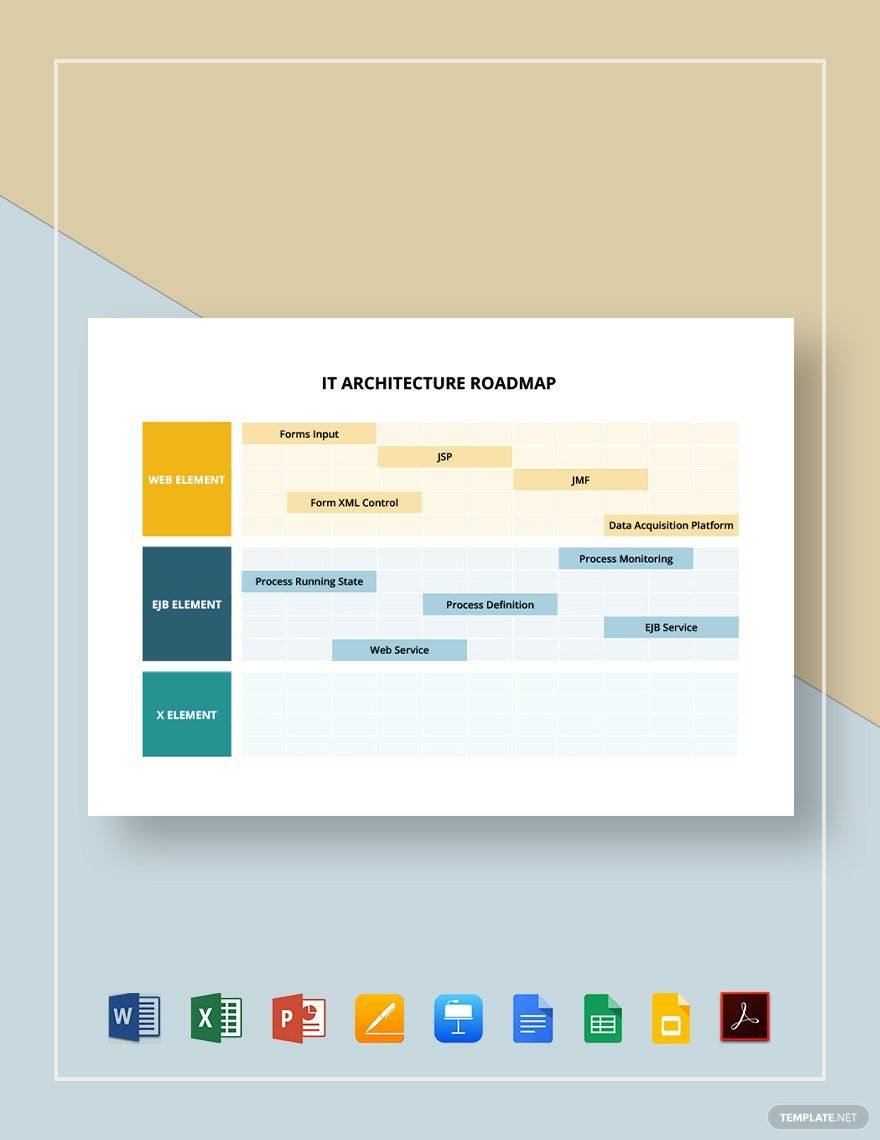
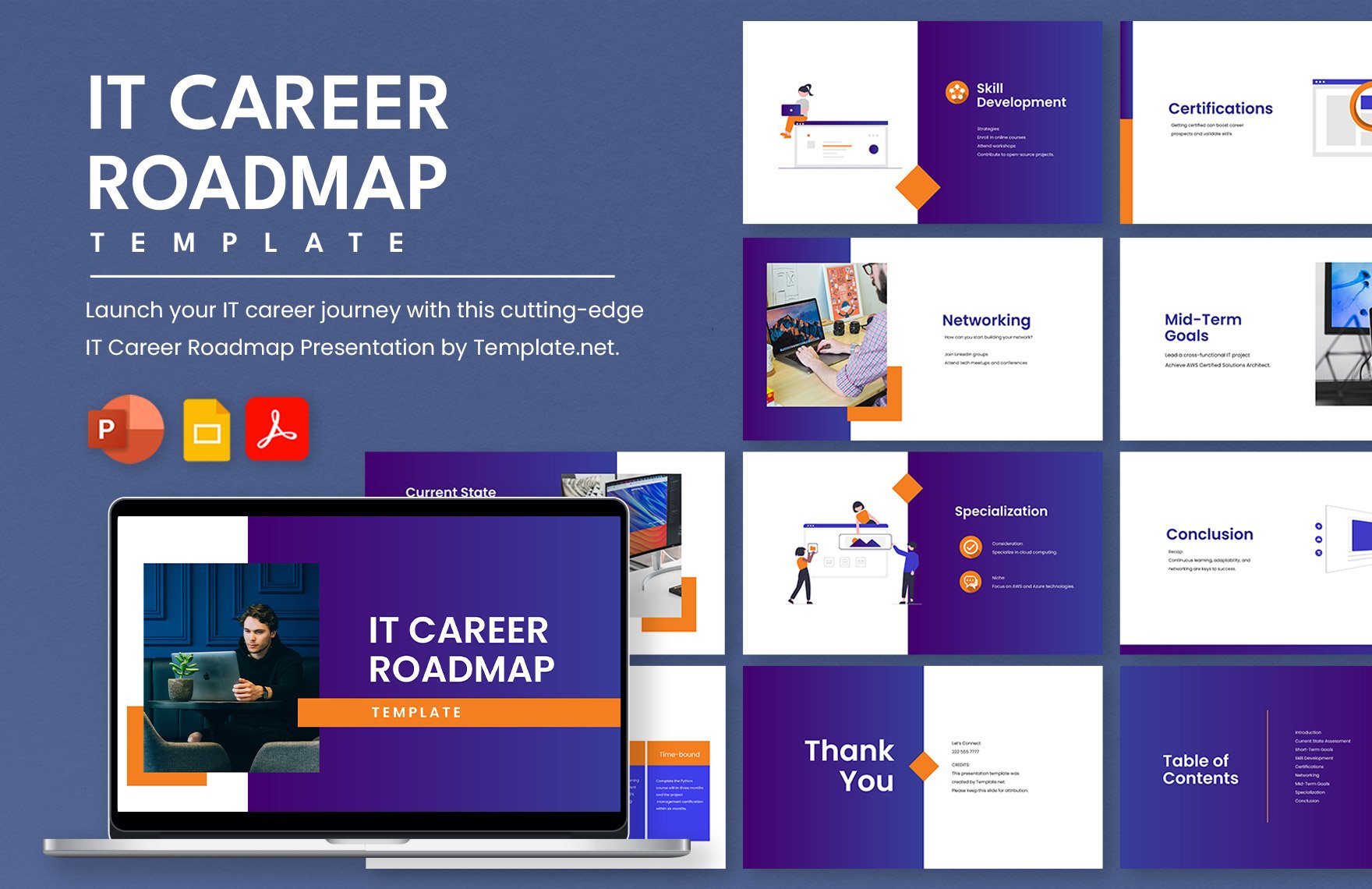
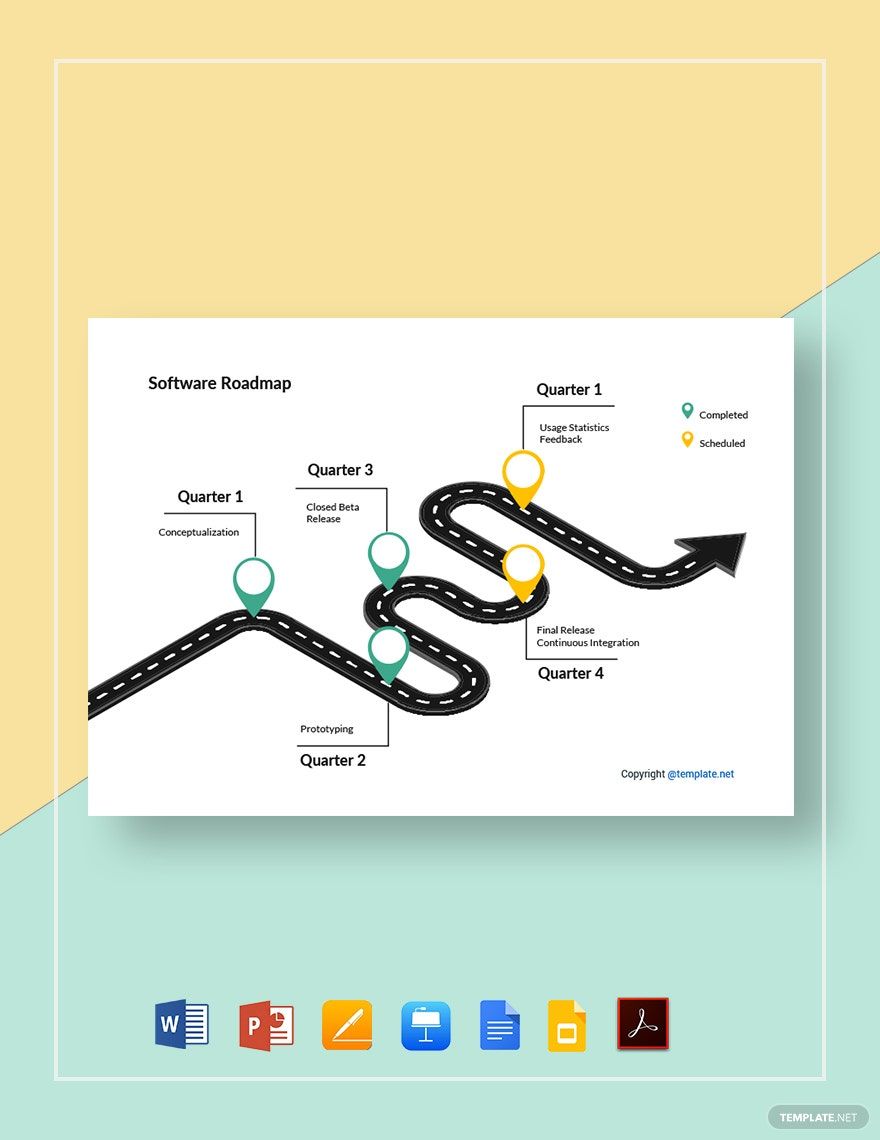
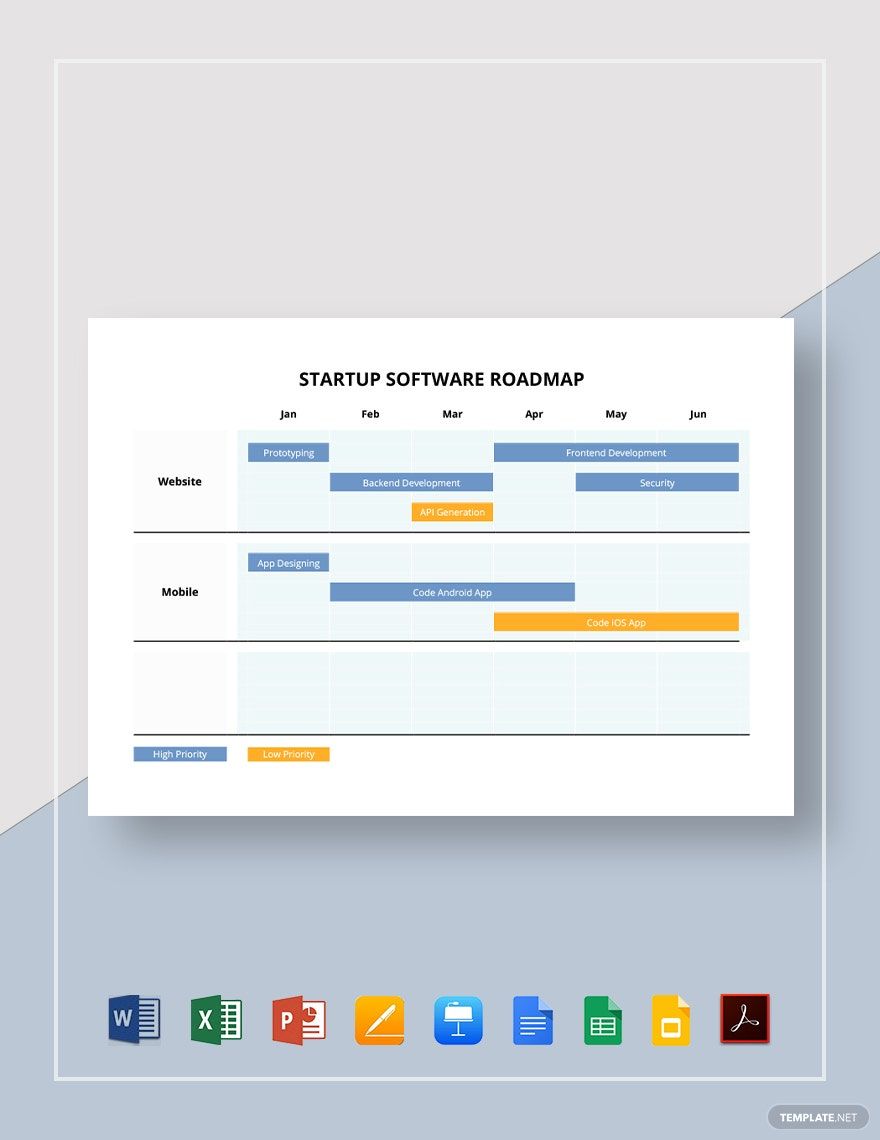
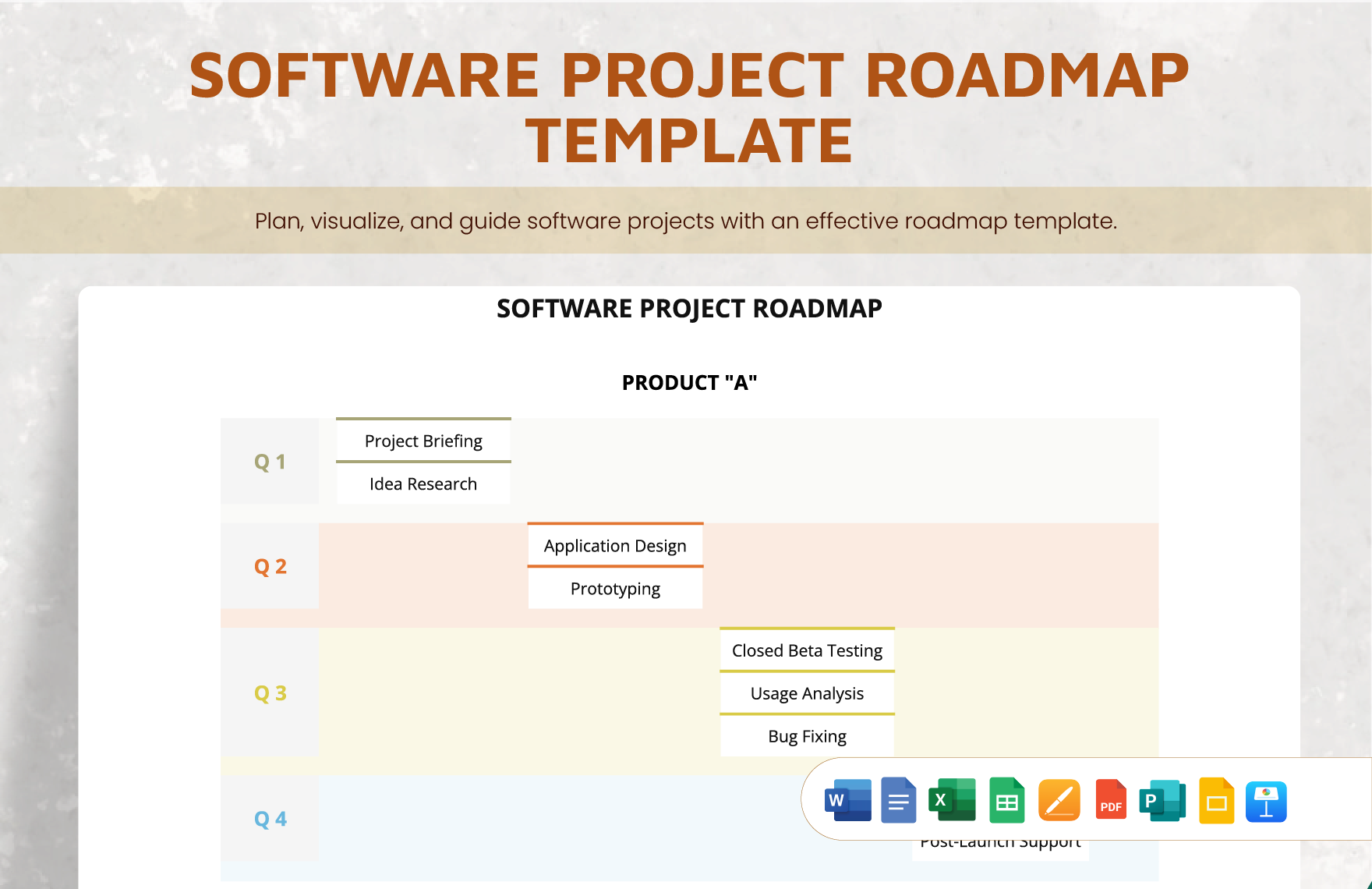
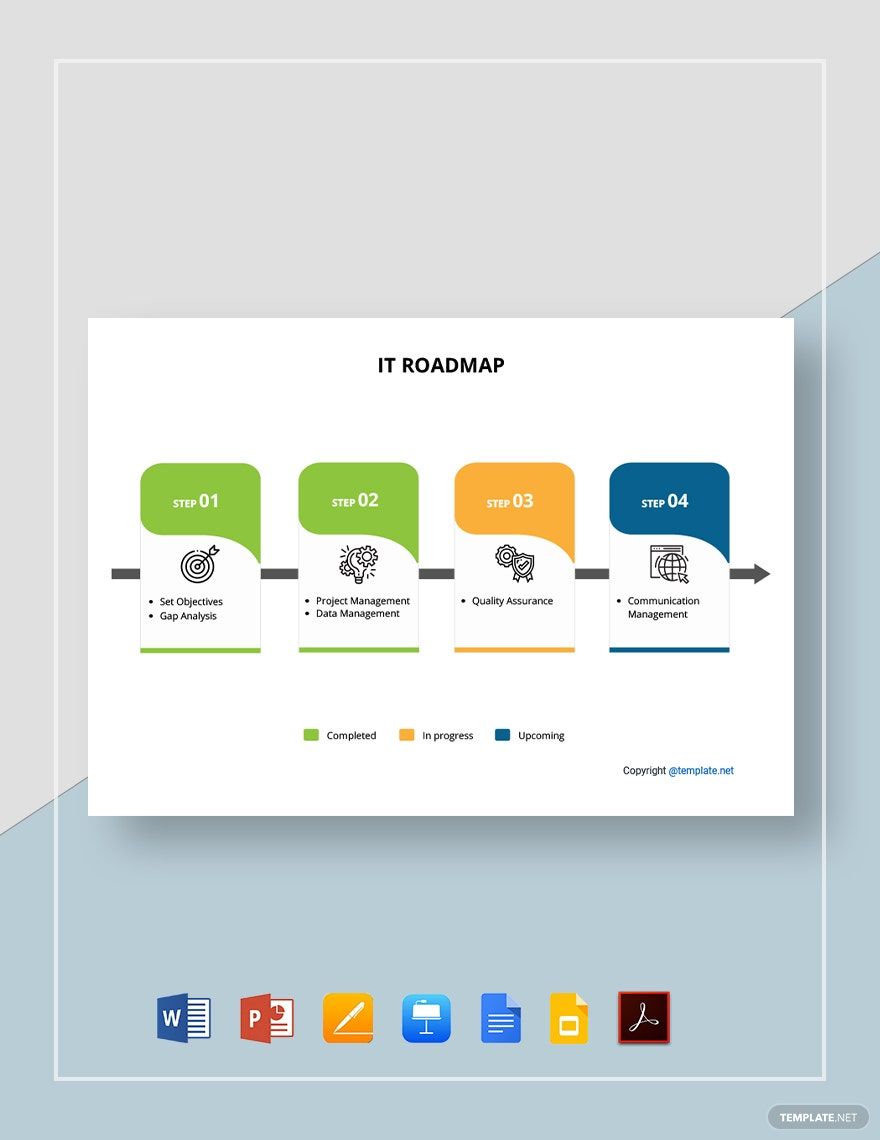
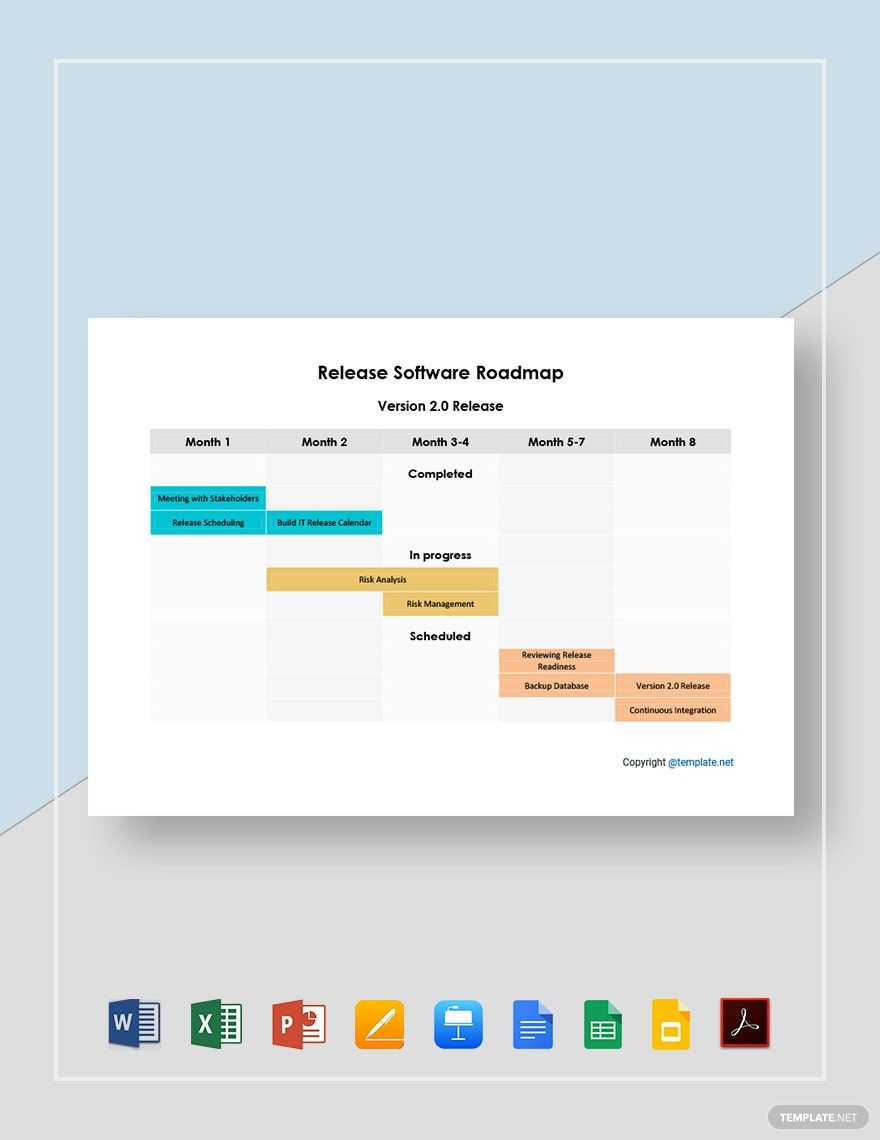
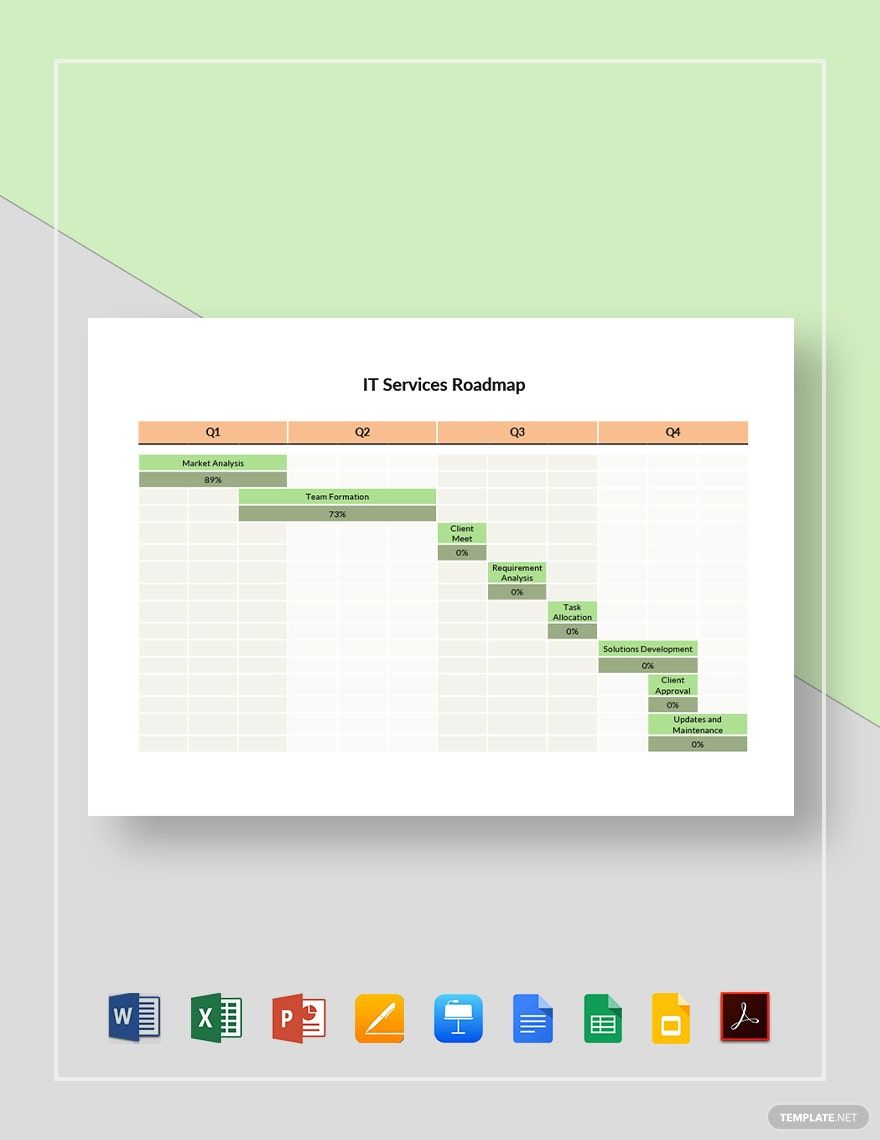
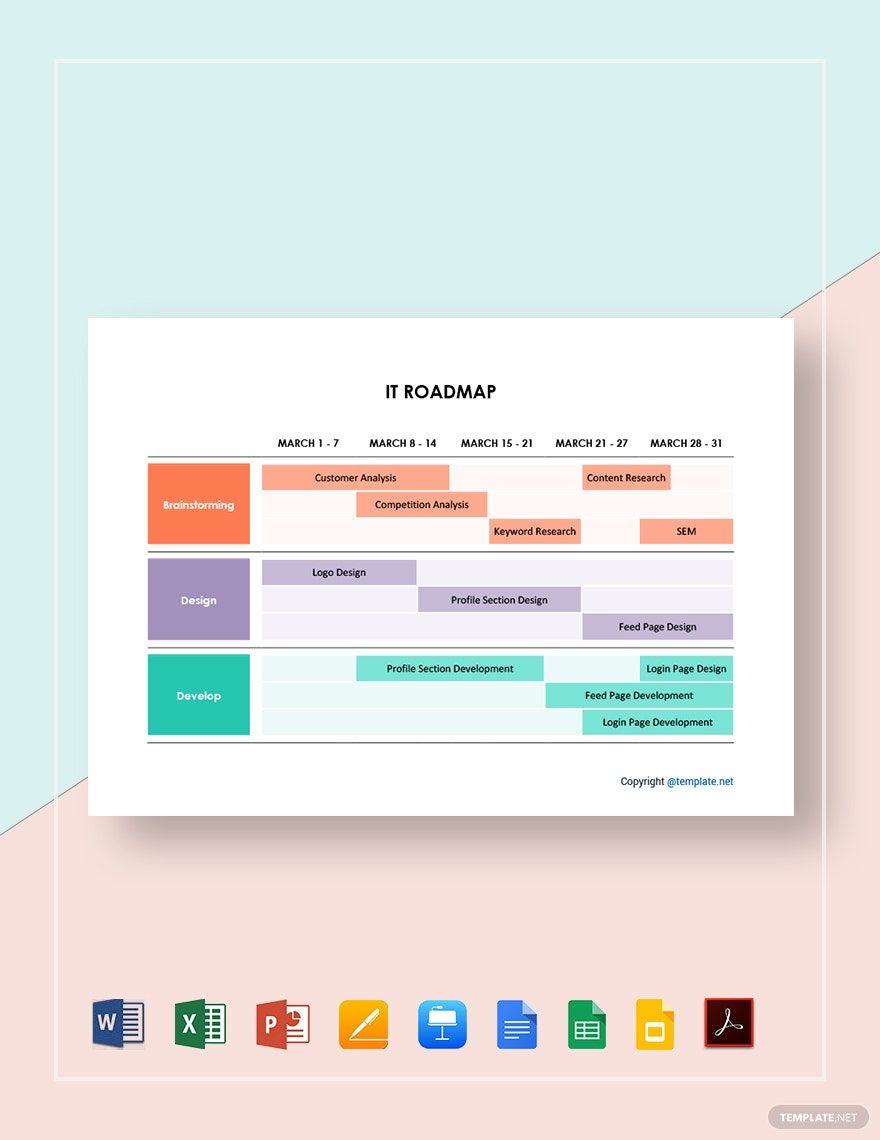
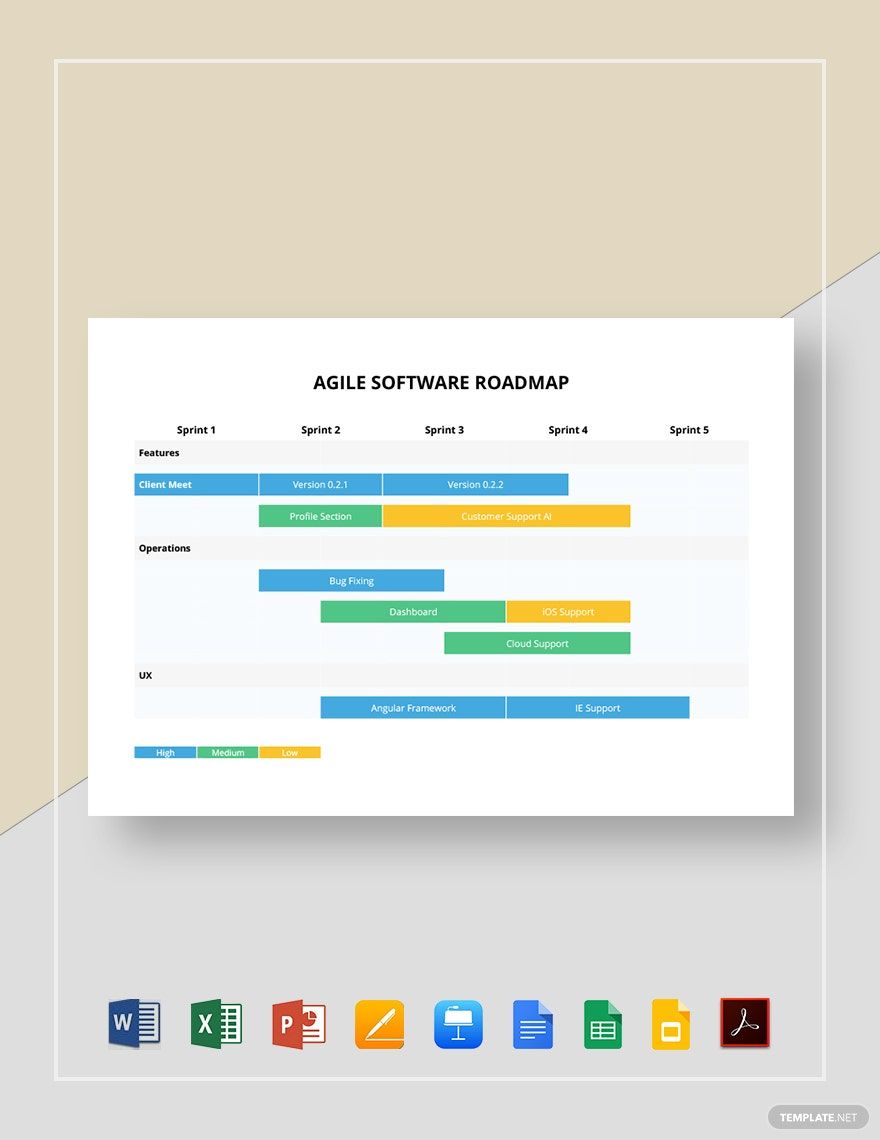
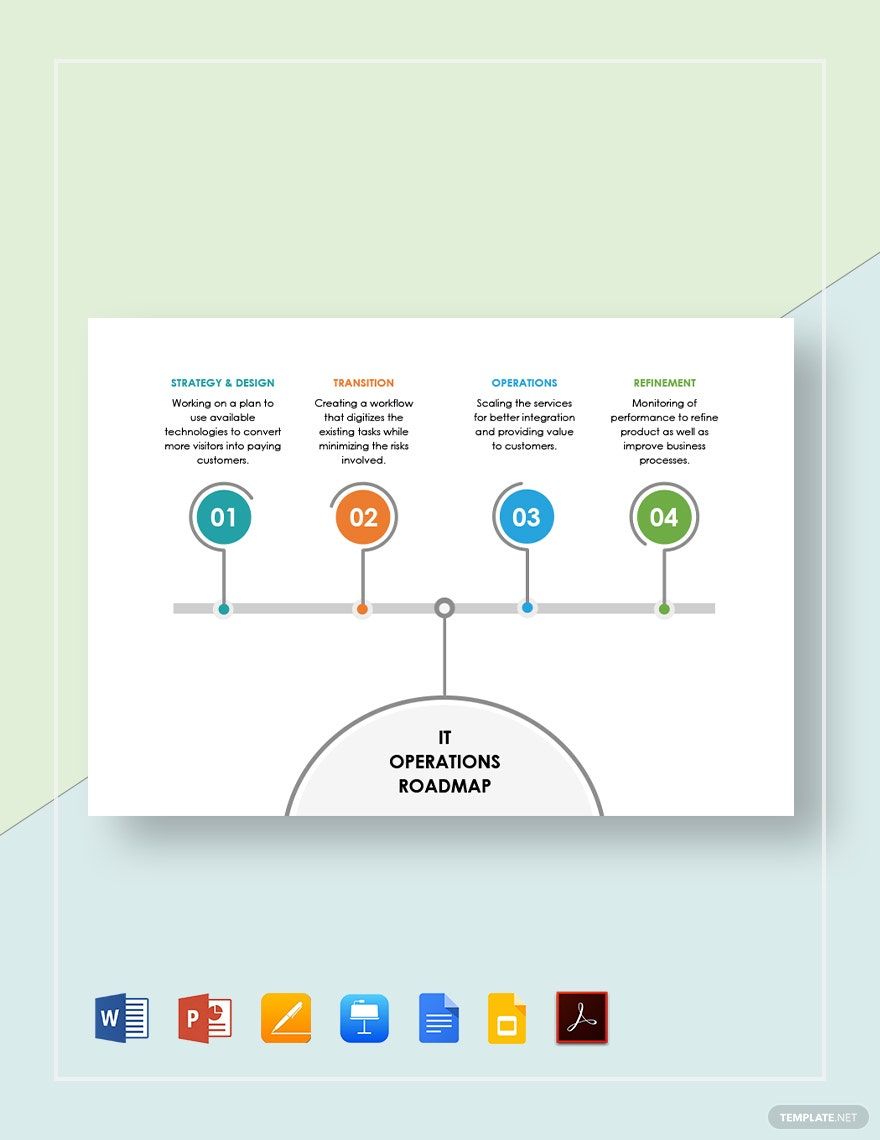
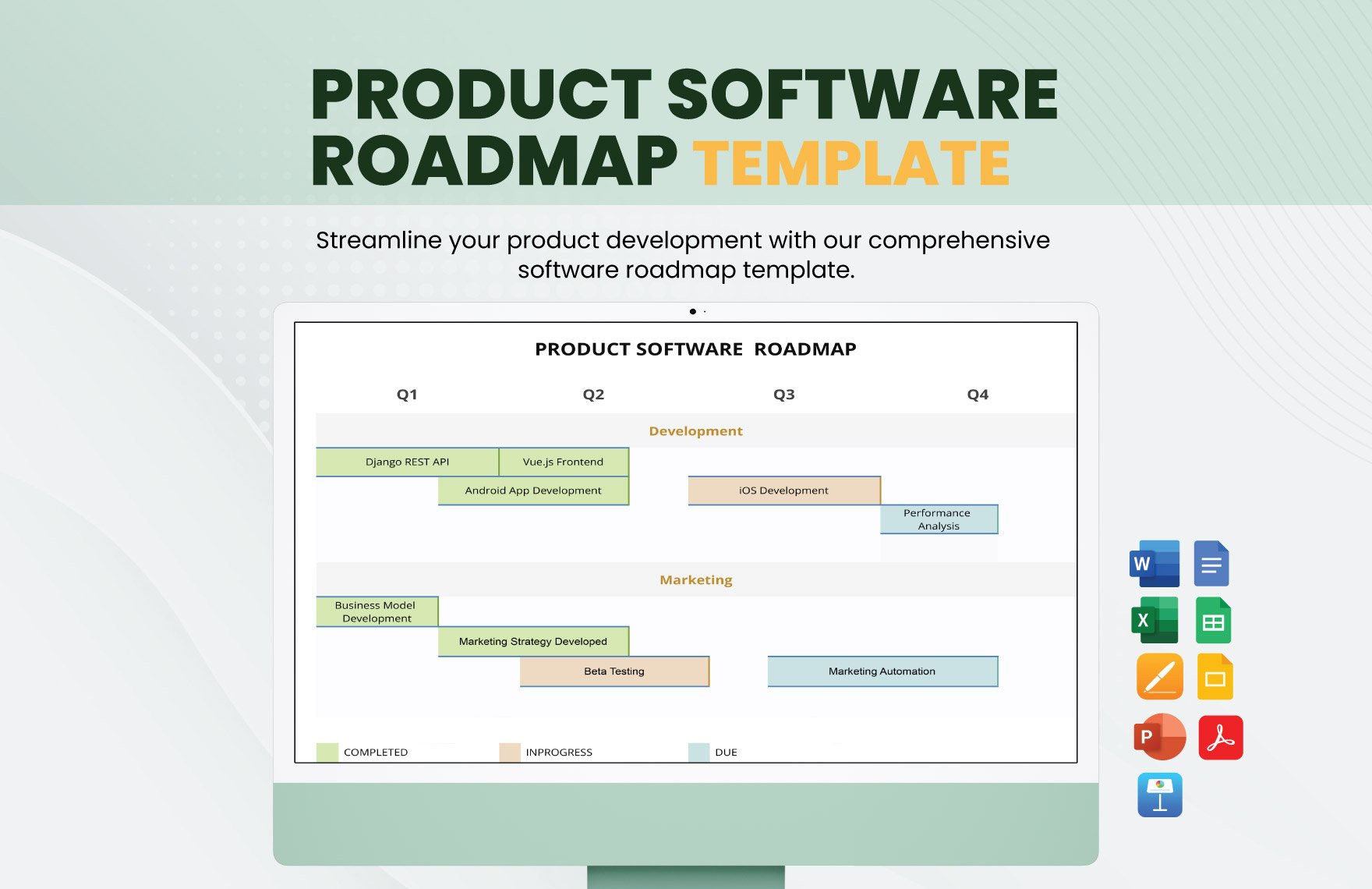
Using IT roadmaps is essential to the development of a technology-based company. With multiple shareholders involved in a company, you can expect each one to have its own contribution. This results in the need for using a roadmap. Whether or not you plan on making one from scratch, why not use any of our IT Roadmap Templates in Google Slides instead? Professionally designed and easily editable, these ready-made products are guaranteed to save you a lot of time. Focus your attention on achieving your goals by subscribing to our templates!
Free IT Roadmap Template in Google Slide
Use Template.net's Free IT Roadmap Templates in Google Slides When You Need to Showcase Your Future Vision in a Presentation. Our Selection Provides Visual Charts That Are Readily Downloadable and Fully Customizable. We Have Strategic Tools to Outline the Parameters, System, Priorities, and Other Details in Your IT-Based Delivery. Download Now and Illustrate Your Timeline Effectively.

How to Create an IT Roadmap in Google Slides
According to Devra Gartenstein, roadmaps should involve the whole team so that everyone knows where they are and how far their goal is. Indeed, this is why businesses rely on roadmaps when managing projects. If you need to make one in Google Slides, our tips below might come in handy.
1. Determine the Main Focus of the Roadmap
Before anything else, identify your strategic priorities and functional impact. Your roadmap's goal should reduce energy and expense, but not restrict your vision. Think about the resources to help your group be more strategic, analytical, and attentive. Also, identify how you can give clients a better user experience and in what areas you can improve the business.
2. Plan a Few Steps Ahead
An asset that only meets the basic needs leads to lower returns, initiative replication, and increased expenses. People expect to connect through various channels to promote a smooth and satisfying experience. Focus your energy on improving your business roadmap, and recognize what needs innovating within the next few years.
3. Identify Your Company’s Needs and Priorities
Assess your company's processes and determine inconsistencies in the system. You may also review the functional capabilities that require improvement. However, you must decide what fundamental details are needed to determine how, where, and to whom it can be acquired.
4. Calculate the Expenses
Major innovations in IT companies can get very costly. This weight of the costs will depend on the size of the business and the nature of your specifications. Make sure to analyze the costs and provide a reasonable estimate for each initiative. Moreover, take into consideration massive infrastructure expenses, licensing fees, and regular services.
5. Develop a Timeline
Ensuring that your programs are handled sensitively is a must. Sadly, keeping an eye on all of it is almost impossible. Your plan must include a reasonable timeline based on your goals. Include the length of each work and the available resources. Also, don’t forget to consider the restrictions that may cause hindrances in your performance.
Frequently Asked Questions
How do you define roadmaps?
Roadmaps are defined as a linear diagram that consists of the events or activities to do for the company to reach a target goal. This graphical tool is used by companies to help the team understand processes better and keep them aligned to the goal.
What are the advantages of using roadmaps?
- Roadmaps help in aligning your IT system to the company’s goals.
- Privacy or security issues can be detected and fixed right away.
- Roadmaps help in protecting the company from unnecessary expenses.
What are the characteristics of an effective roadmap?
- It should tell a story of how the ideas and features come together to meet the goals of the business.
- It should communicate with the team not only the process but also the reason why the process exists,
- It should be more than just informative, it should also be persuasive.
What are some good roadmap practices?
- On top of answering the “what” questions, be sure to also answer the “why.”
- Incorporate themes that relate to your business.
- Go back and settle backlogs before moving to another goal or roadmap.
What are some tips when using Google Slides?
- Input data on Google Sheets and link the file to Google Slides.
- Add shadow to your text to make it stand out from its background.
- Change the form or shape of imported images through masking.
